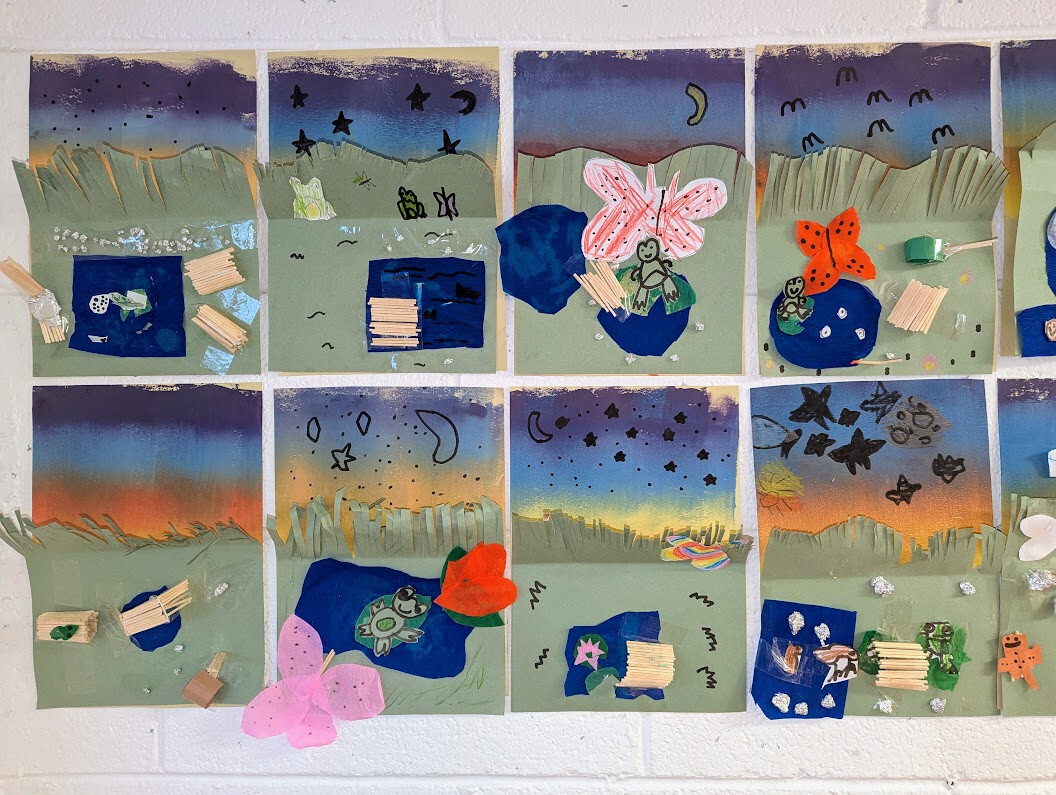
Building on our earlier work with colour blending and sky backgrounds, the children used their painted artworks to create detailed pond habitat scenes. This project brought together learning from Science, Visual Art, and Geography, while giving the children the opportunity to explore creativity through collage, design, and construction.
Using their painted sunrise and sunset skies, the children discussed how the colours of the sky change at different times of the day. They then decorated their skies with imaginative details such as stars, moons, birds, and insects.
The children then began constructing their own pond environments, representing both the life cycle of a frog and the life cycle of a butterfly within their scenes. They carefully considered where animals, plants, and insects might live within a real pond habitat.
A wide variety of materials were explored and used creatively, including:
-
Tin foil to represent rocks and stones around the pond
-
Matchsticks to build small bridges and structures
-
Cardboard tubes and sticks to create logs and shelters
-
Paper collage for water, lily pads, plants, and habitats
-
Laminated pieces showing frogspawn, tadpoles, froglets, adult frogs, and flying insects
Many children extended the activity even further through their imagination. Some created snails resting on logs, tiny shelters, and even relaxing chairs made from matchsticks beside the pond.
Throughout the project, the children demonstrated the knowledge they had gained from our science investigations by correctly representing the different stages of life cycles, placing frogspawn in the pond water, adding insects that frogs might eat, and creating habitats where animals could live.
This activity supported the development of many important skills, including:
-
Creativity and artistic expression
-
Construction and design thinking
-
Problem-solving and innovative use of materials
-
Understanding animal life cycles and habitats
-
Connecting scientific knowledge with visual representation
-
Fine motor skills through cutting, assembling, and placing materials
-
Collage techniques and mixed-media art
-
Spatial awareness and composition
-
Collaboration, communication, and sharing ideas
Each artwork is unique, reflecting the children’s imagination, creativity, and growing understanding of pond habitats and the natural world.
It was wonderful to see the children proudly explaining their work and the scientific ideas behind their creations. The finished display has transformed our Gallery Wall into a vibrant pond habitat, full of colour, life, and learning. 🐸🌿🎨


